Expert Stove & Oven Repair in Grafton, MA
Appliance Repair for Homes & Businesses in Grafton, North Grafton, South Grafton, Upton, Northbridge, Massachusetts and Nearby Areas
Stove and Oven Repair in Grafton Massachusetts | Appliance Repair Pros
Stove and Oven Repair in Grafton Massachusetts is a vital service for keeping your kitchen functional and safe. At Appliance Repair Pros, we help homeowners in Grafton, North Grafton, South Grafton, and the neighboring towns of Upton and Northbridge when their cooking appliances fail. Whether your gas burner refuses to light, your electric oven won’t bake evenly, or your glass cooktop is showing an error code, we have the specialized skills to fix it. We understand that in our area, housing ranges from historic homes with older gas lines to modern condos with high-tech induction cooktops, and we are equipped to handle the specific challenges of each.
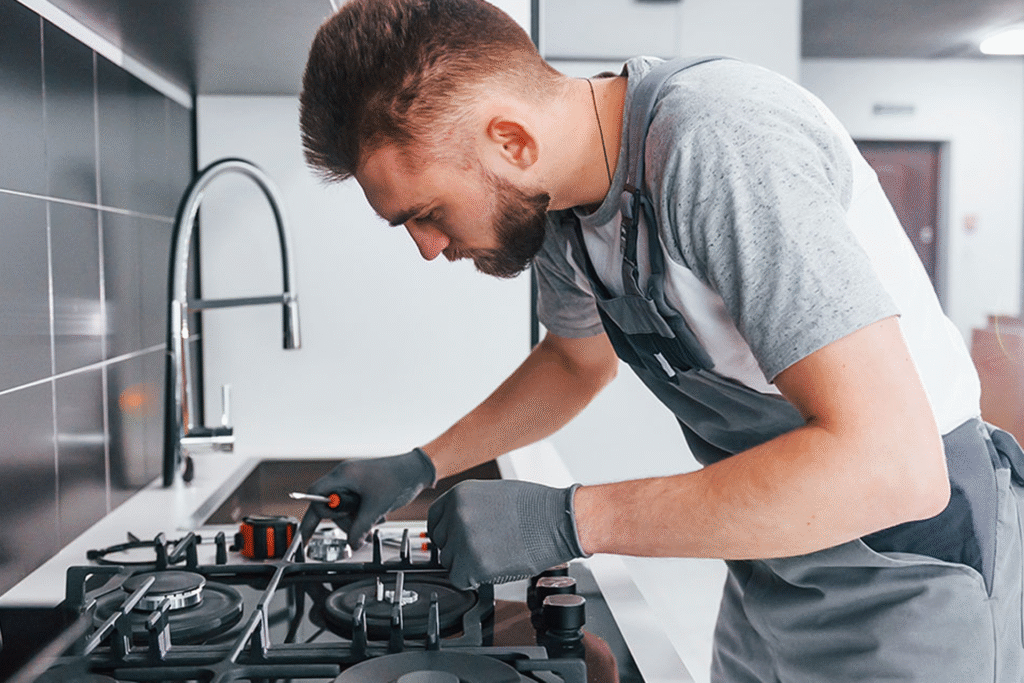
We approach every repair with a focus on safety, particularly when dealing with gas connections and high-voltage electrical circuits. Our diagnostics are thorough; we test igniters, heating elements, and sensors to find the root cause of the problem instead of guessing. We treat your home with care, using protective mats and ensuring we leave your kitchen as clean as we found it. When you need a reliable solution to get dinner back on the table, we are ready to help.
Reach out to us for assistance.
Stove and Oven Repair Services in Grafton
A broken stove or oven disrupts family meals and holiday gatherings. Unlike a dishwasher or washer which can be delayed, cooking is a daily necessity. Our service covers the full spectrum of cooking appliances, from slide-in ranges to complex wall ovens. We work to restore precise temperature control and safe operation so you can cook with confidence.
Cooking systems we work on
- Gas ranges and standalone stoves
- Electric ranges (coil and smooth top)
- Wall ovens (single and double units)
- Gas cooktops and rangetops
- Electric glass cooktops
- Induction cooktops
- Dual fuel ranges (gas cooktop with electric oven)
- Slide-in and freestanding models
What makes stove and oven repair tricky
Cooking appliances involve dangerous elements that require professional attention. Repairing them is not just about changing parts; it is about ensuring the unit operates safely within your home. Challenges include:
- Carbon monoxide risks from improper gas combustion
- High voltage (240V) circuits in electric units
- Calibrating temperature sensors for accurate baking
- Diagnosing complex electronic control boards
- Handling fragile ceramic glass tops
- Working with hidden spark modules and safety valves
- Accessing built-in wall units without damaging cabinetry
Common Stove and Oven Problems We Fix
Gas Burner Will Not Light
Turning the knob and hearing a click but seeing no flame is a common frustration for gas stove owners. This can be caused by a lack of gas flow or a failure in the ignition system. In older Grafton homes, this can sometimes be related to debris blocking the gas ports.
Likely causes:
- Clogged burner ports from food spills
- Cracked or worn spark electrode
- Failed spark module
- Defective ignition switch harness
- Moisture in the burner assembly
How we diagnose it:
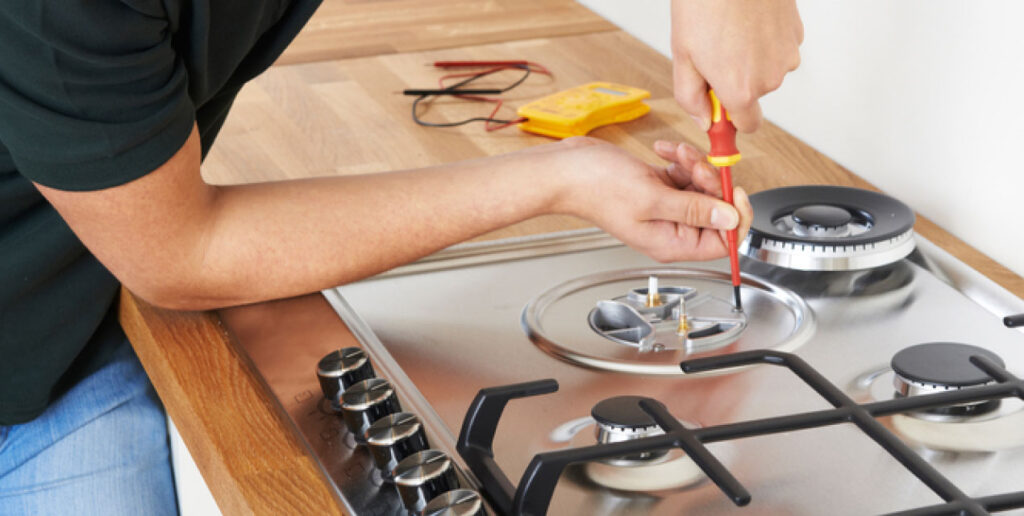
We test for the presence of a spark. If there is a spark but no flame, we inspect the gas path and burner caps. If there is no spark, we use a multimeter to trace the electrical signal from the knob to the module.
What you can do right now:
Lift the burner cap and look for any food debris blocking the small holes. Clean them gently with a toothbrush or a paperclip, but be careful not to widen the holes.
Oven Is Not Heating
An oven that stays cold is useless. Whether you have gas or electric, the system relies on a heat source and a thermostat. A failure in either prevents the oven from reaching temperature.
Likely causes:
- Weak or broken gas igniter (glow bar)
- Burned out electric bake or broil element
- Tripped thermal fuse
- Defective safety valve
- Control board relay failure
How we diagnose it:
For gas ovens, we observe the igniter. If it glows but takes more than 90 seconds to light the gas, it is too weak to open the safety valve. For electric ovens, we test the element for continuity and verify voltage delivery from the board.
What you can do right now:
Check your circuit breaker. Electric ovens run on a double breaker (240V). Sometimes one leg of the power trips, leaving the lights working but the heat off.
Oven Bakes Unevenly
If your cookies burn on one side or cakes fall in the middle, your oven is struggling with heat distribution or regulation. This is often a sensor issue or a mechanical failure in the circulation system.
Likely causes:
- Drifting temperature sensor
- Broken convection fan motor
- Worn door gasket leaking heat
- Blocked airflow vents (from foil on the bottom)
- Calibration needed
How we diagnose it:
We use a digital thermometer to measure the internal temperature swings over time. We inspect the convection fan to ensure it spins freely and check the door seal for gaps using a dollar bill test.
What you can do right now:
Remove any aluminum foil you have placed on the bottom of the oven. This reflects heat incorrectly and blocks airflow, causing significant baking issues.
Electric Element Not Working
On an electric stove, a burner that stays dark or only works on “High” is a safety hazard and a cooking nuisance. This applies to both exposed coil elements and hidden radiant elements under glass.
Likely causes:
- Burned out heating element
- Defective infinite switch (the control knob)
- Loose wire connection at the terminal block
- Burnt receptacle (for coil burners)
How we diagnose it:
We swap the non-working element with a working one (if possible) to isolate the problem. We test the switch to see if it regulates voltage correctly at different settings.
What you can do right now:
For coil tops, ensure the element is pushed firmly into the receptacle. Loose connections often cause arcing and failure.
Oven Door Is Stuck Shut
This panic-inducing problem often happens after running a self-cleaning cycle. The heat causes the safety latch to engage, and if the sensor or switch fails, the door remains locked even after the oven cools down.
Likely causes:
- Failed door lock motor assembly
- Bad door switch sensor
- Control board logic error
- Warped door frame from high heat
How we diagnose it:
We attempt to manually override the lock mechanism to open the door safely. We then test the lock motor and switches to see which component failed to release.
What you can do right now:
Do not force the door open, as you will break the glass or the latch. Turn off the breaker for 5 minutes to reset the computer, which sometimes releases the lock.
Smell of Gas
A gas smell is a serious safety concern. While a faint whiff when lighting a burner is normal, a persistent smell indicates a leak. This requires immediate attention.
Likely causes:
- Leaking gas valve
- Loose gas line connection
- Igniter failing to light the gas quickly enough
- Cracked supply line
How we diagnose it:
We use electronic gas detectors and bubble solution to verify the source of the leak. We inspect the safety valve to ensure it is closing fully when the oven is off.
What you can do right now:
If the smell is strong, shut off the gas supply, leave the house, and call your utility company immediately. Do not turn lights on or off.
Glass Cooktop is Cracked
Ceramic glass tops are tough but not invincible. Dropping a heavy pot or a spice jar can cause a crack. A cracked cooktop is unsafe to use because liquids can seep into the high-voltage electrical components below.
Likely causes:
- Impact from a heavy object
- Thermal shock (cold pot on hot surface)
- Overtightening installation screws
How we diagnose it:
This is a visual inspection. We determine if the crack affects the structural integrity and safety of the unit.
What you can do right now:
Stop using the cooktop immediately. Using a cracked surface risks electrical shock and shorting out the entire range.
Control Panel or Display Issues
If the oven beeps randomly, displays an error code, or the clock is dim, the electronic “brain” of the appliance is failing. This is common after power surges or in older units.
Likely causes:
- Main control board failure
- Touchpad membrane ribbon cable shorted
- Power surge damage
- Loose wiring harness
How we diagnose it:
We test the input voltage to the board and check the ribbon cable connection. We often perform a button matrix test to see if the touchpad is registering inputs.
What you can do right now:
Try flipping the circuit breaker off for one minute and then back on. This “reboot” can sometimes clear temporary logic glitches.
Safety Notes for Stove and Oven Issues
Cooking appliances involve substantial heat and energy. Malfunctions here can pose risks of fire, burns, and air quality issues. Please observe these safety rules before calling for service.
- If you smell gas (rotten eggs): Turn off the gas shut-off valve behind the stove immediately. Open windows if safe to do so. If the smell is strong, evacuate and call 911 or the gas company.
- If you see yellow flames (Gas): Gas flames should be blue. Yellow or orange flames indicate incomplete combustion, which produces Carbon Monoxide. Stop using the appliance and have it serviced.
- If you see sparking or arcing (Electric): Turn off the circuit breaker immediately. This usually indicates a shorted wire or a burned-out element that could cause an electrical fire.
- If glass breaks: Do not attempt to cook on a broken glass cooktop. Spills can penetrate the glass and cause a massive electrical short or shock hazard.
Brands We Service for Stove and Oven Repair in Grafton
From high-end chef’s ranges to standard apartment stoves, we have the training to service the specific brands found in Grafton kitchens.
Whirlpool Family (Whirlpool, Maytag, KitchenAid, Amana)
These are the workhorses of many local homes. They use distinct “Direct Spark” ignition systems in gas ovens and robust infinite switches for electric burners.
Common issues we see with these models:
- Gas igniters wearing out (glow bar style)
- Spark modules failing to click
- “AquaLift” self-clean cycles not cleaning well
- Control board relays sticking
We carry standard igniters and sensors for these brands in our vehicles to speed up repairs.
GE Family (GE, Hotpoint, Café, Profile)
GE ranges are known for their reliability but have specific quirks, such as the placement of safety valves and the design of their radiant elements.
Common issues we see with these models:
- F7 error codes related to stuck keys
- Bake elements burning out inside the oven
- Glass cooktop sensors failing
- Convection fans becoming noisy
GE often uses a specific calibration method for their ovens which we can adjust if your temperature is consistently off.
Samsung and LG
These tech-forward brands offer features like dual-door ovens and specialized “rapid boil” burners. Their electronics are complex and sensitive to voltage fluctuations.
Common issues we see with these models:
- Temperature sensors drifting out of spec
- Touchscreens becoming unresponsive
- Burners lighting but not staying lit (flame sensor issues)
- Convection fan motors seizing up
Diagnosing these units requires specialized multimeter testing of the main PCB (Printed Circuit Board) to ensure the logic is sound.
Frigidaire and Electrolux
Commonly found in many renovated kitchens, these units are generally easy to service but suffer from control board longevity issues.
Common issues we see with these models:
- F10 runaway temperature errors
- Surface burner switches failing
- Oven probe sockets shorting out
- Door hinges wearing out preventing a good seal
We check the thermal probe circuit first on these models as it is a frequent point of failure.
Bosch and Thermador
These premium brands often feature high-BTU gas burners and dual-fuel configurations. They require a technician who understands commercial-style appliances.
Common issues we see with these models:
- Simmer control modules failing
- Spark igniters clicking continuously
- Relay boards for electric ovens failing
- Door gaskets degrading
Repairing these units often involves accessing components from the back or top, requiring careful disassembly.
Understanding Common Oven Error Codes
If your oven displays a code, it is telling you which circuit is acting up. While helpful, these codes are not a diagnosis; they are a clue. A “sensor error” can mean a bad sensor, a bad wire, or a bad board.
- F1 or F-1: Electronic Control Board failure or stuck touchpad key.
- F2: Oven temperature is too high (Runaway temperature). Likely a stuck relay.
- F3 or F10: Open or shorted temperature sensor (Probe).
- F9: Door latch or lock mechanism failure.
- F7: Keypad or ribbon cable issue.
- F5: Relay board or gas safety valve issue (depending on brand).
- cA or F0: Cancel key error or board communication error.
Maintenance Tips for Stove and Oven Owners in Grafton
Preventing breakdowns is often about cleanliness and gentle use. Here are some tips relevant to our local area.
Clean Spills Immediately
Tomato sauce, lemon juice, and sugary spills are acidic. If left on the enamel bottom of the oven, they can eat through the metal over time. Wipe them up once the oven is cool.
Avoid Foil on the Bottom
Never line the bottom of your oven with aluminum foil. It blocks airflow, traps heat, and can melt onto the heating element or the porcelain finish, causing permanent damage.
Check the Door Gasket
The rubber seal around the door keeps heat in. If it is torn or brittle, heat escapes, causing the oven to work harder and baking to be uneven. Clean it gently with soap and water, avoiding harsh chemicals.
Clean Gas Ports Gently
If a burner is acting up, the small holes (ports) may be clogged. Use a paperclip or a stiff toothbrush to clear them. Do not use a toothpick, which can break off inside.
Exercise the Self-Clean with Caution
The self-clean cycle gets extremely hot. We recommend avoiding it right before a major holiday like Thanksgiving, as the extreme heat is the most common cause of control board and fuse failure.
Service Area for Stove and Oven Repair in and Around Grafton Massachusetts
Appliance Repair Pros is your local service provider. We are not a distant call center; we operate right here in the Blackstone Valley. We serve the village centers, the new developments, and the rural roads of Grafton and its neighbors.
Communities we serve include:
- Grafton
- North Grafton
- South Grafton
- Upton
- West Upton
- Northbridge
- Whitinsville
- Rockdale
- Linwood
Zip codes we serve: 01519, 01536, 01560, 01568, 01534.
Frequently Asked Questions
Is it worth repairing an older range?
Older gas ranges are often built like tanks and are very much worth repairing, especially if the issue is just an igniter. Older electric ranges are also simple to fix. However, if the control board is obsolete or the oven floor is rusted through, replacement might be the safer choice. We provide an honest assessment upon inspection.
Why is my gas oven taking so long to heat up?
This is the classic symptom of a weak glow-bar igniter. As the igniter ages, its resistance changes, and it takes longer to draw enough current to open the gas safety valve. Replacing the igniter usually restores the oven to like-new performance.
Can you replace the glass on my cooktop?
Yes, but the cost of the glass part itself is very high, often close to the price of a new stove. We can check the availability and price for you, but for many standard models, a cracked glass top often means it is time for a replacement unit.
Why does my oven smell like gas when I turn it on?
A very brief smell of gas for a few seconds when you first turn the oven on is normal as the valve opens before ignition. However, if the smell persists for more than a few seconds or you smell it when the unit is off, you have a leak or an ignition failure that needs immediate repair.
Why is my electric burner sparking?
Sparking usually means a short circuit. On coil stoves, it often happens at the receptacle block where the element plugs in. If grease builds up or the contacts loosen, it arcs. We can replace the receptacle block and the element to make it safe again.
Do you service dual fuel ranges?
Yes, we service dual fuel units (gas cooktop with electric oven). These are excellent appliances but require a technician who understands both gas safety and electrical heating circuits. We have the training to handle both systems.
How long should preheating take?
A standard gas or electric oven should reach 350 degrees in 10 to 15 minutes. If it is taking 20 minutes or more, you likely have a weak igniter (gas) or a burned-out element (electric).
Is there stove repair near me in Grafton?
Yes, we are based locally and serve Grafton and the surrounding towns daily. We can often get to your home faster than companies dispatching from Worcester or Boston, and we know the local area well.
Why is my convection fan making noise?
Over time, the bearings in the fan motor can dry out, or the fan blade can become loose and hit the housing. This creates a rattling or grinding noise. We can usually tighten the blade or replace the motor to restore quiet operation.
What if my self-clean door lock is stuck?
Do not try to pry it open. You can damage the door frame. Turn the power off at the breaker for 5 minutes. If it doesn’t unlock when power is restored, call us. We can manually trip the latch from inside the cabinet to open it without damage.
Conclusion
A functioning stove and oven are the heart of a home, especially in a community like Grafton where family meals are a tradition. At Appliance Repair Pros, we are committed to keeping your kitchen safe and operational. We combine local care with technical expertise to solve your cooking appliance problems efficiently. Whether it is a holiday emergency or a daily annoyance, we are here to fix it right.
Contact us today.